AI agents are moving from experimentation into customer, workforce, and
business workflows, but traditional IAM was built for humans and static
machine identities.
The Ultimate Guide to Identity for AI explains how organisations can
establish a trusted foundation for autonomous and delegated agents by
giving each agent a distinct identity, tying actions to the appropriate human
or system authority, enforcing least privilege, and maintaining human
oversight and auditability.
It introduces the four pillars of Identity for AI:
delegate rather than impersonate, enforce least privilege, maintain human
oversight, and make every action auditable, along with practical guidance on
agent discovery, lifecycle governance, OAuth 2.0, Dynamic Client
Registration, Model Context Protocol, and Zero Trust.
The guide helps business, security, IAM, and development leaders secure
and scale agentic AI responsibly.
Related Resources
Please fill out the form below to
access the content:
Gartner Magic Quadrant
For the ninth year in a row, Ping Identity has
been named a Leader. Read the report to
learn why.
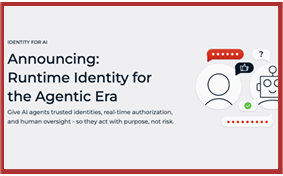
AI agents act continuously—triggering
workflows, making purchases, and
making decisions. But they aren’t
people, so managing their identities like
humans doesn’t cut it. Is Your Identity
Strategy Ready? Learn more.
Discover why Ping Identity was named a
Leader in KuppingerCole's 2025 Access
Management report, with top marks for
orchestration, security. and flexibility.