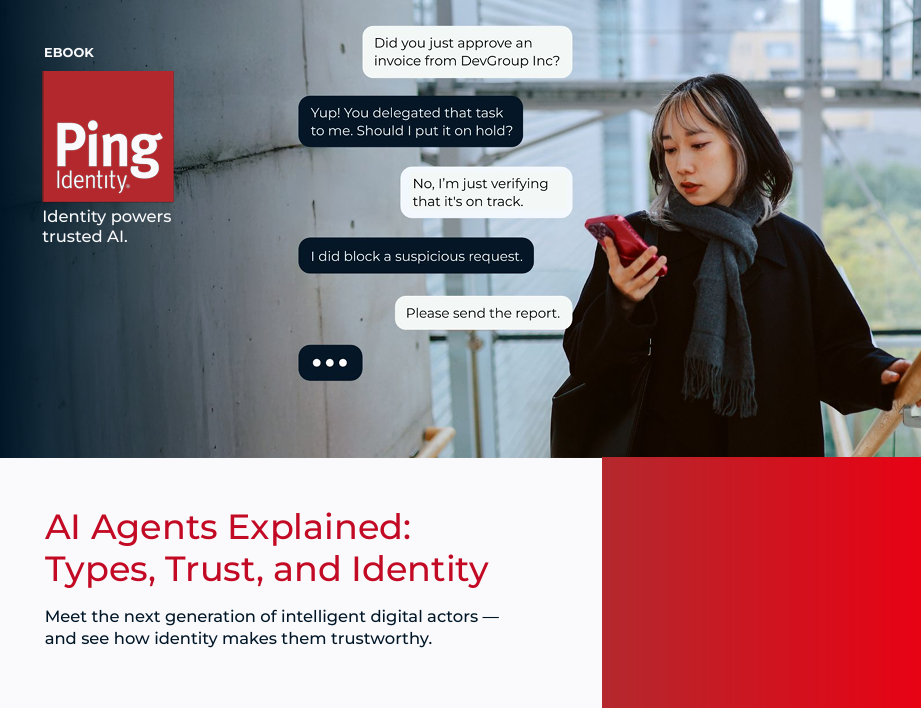
AI Agents Explained: Types, Trust, and Identity

Secure or Smooth? Don’t Make Your Users Choose. Modern IAM turns identity from speed bumps into smooth, secure parts of every experience.

For years, organizations have been stuck in a false tradeoff: lock things down and frustrate users, or loosen controls and accept more risk. Modern IAM breaks that pattern. By replacing rigid legacy controls with adaptive, context-aware access, security gets stronger and experiences get better.

When identity works with users instead of against them, everyone wins. Fewer tickets. Less fraud. Faster progress across the business.

In this short read, discover what modern IAM makes possible:

  • Eliminate friction at the source. Unify siloed IAM systems across workforce, customers, and partners.
  • Apply security only when it matters. Use adaptive MFA and real-time orchestration instead of static controls.
  • Modernize without ripping everything out. Migrate high-impact journeys first and reduce IT overhead.

Related Resources

Please fill out the form below to access the content:

AI Agents Explained Types, Trust, and Identity - POC

Gartner Magic Quadrant


For the ninth year in a row, Ping Identity has been named a Leader. Read the report to learn why.


Identity for AI

AI agents act continuously—triggering workflows, making purchases, and making decisions. But they aren’t people, so managing their identities like humans doesn’t cut it. Is Your Identity Strategy Ready? Learn more.

2025 KuppingerCole Leadership Compass: Access Management

Discover why Ping Identity was named a Leader in KuppingerCole's 2025 Access Management report, with top marks for orchestration, security. and flexibility.